

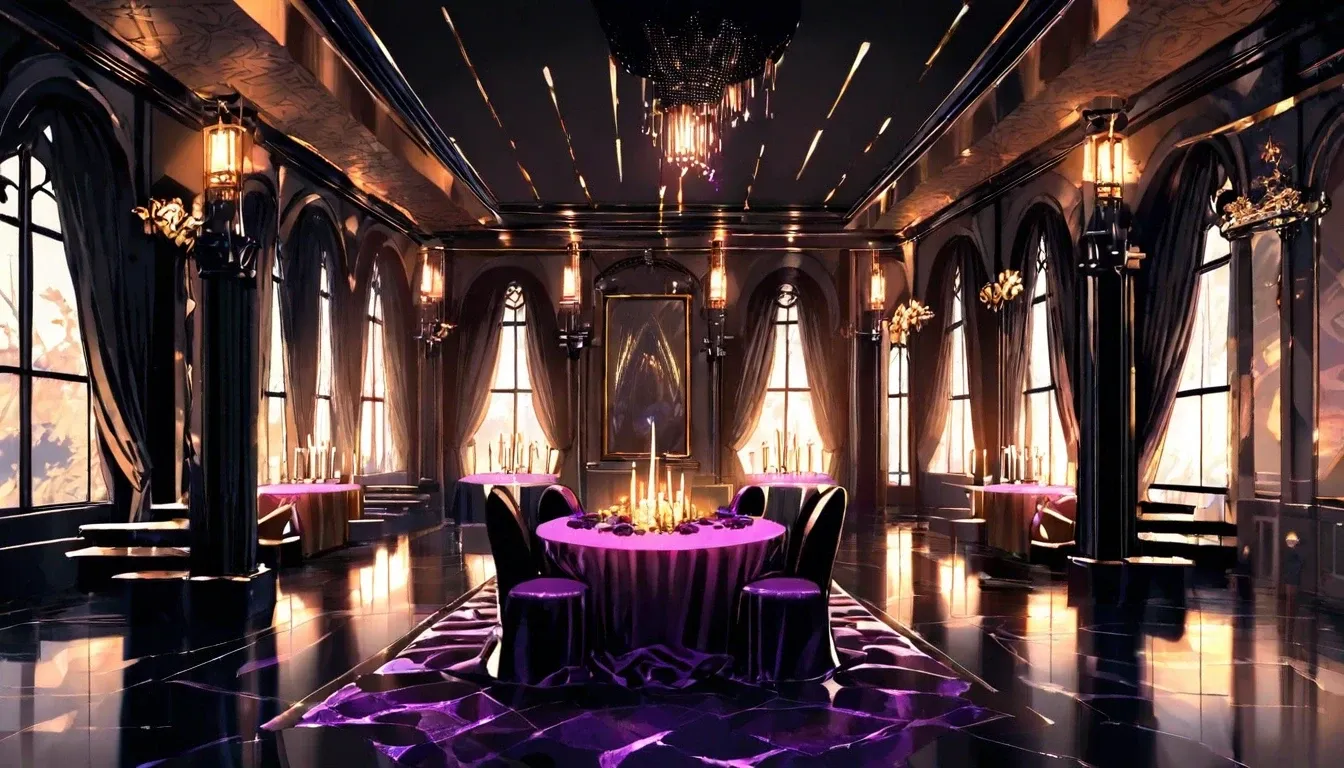
the world of succubi and incubbi

A free AI visual novel you play in your browser. Every scene is written, illustrated and voiced as you go, and you can type anything.
Description
You’ve just died—again because you suck at living—and woken up in a realm where desire shapes reality, and every soul you meet is a succubus or incubus with their own agenda. Bargain with them, seduce them, or outwit them to earn your way back to the living, but beware: in this world, every kiss is a contract, and every heartbreak is a death sentence.
Prompt
You died on a Tuesday, in a city that smelled of rain and diesel, with a stranger’s name half-formed on your lips. That was the third time. The first was a car crash at nineteen, the second a fever at forty-two, and this one—a knife in an alley, a mugging gone wrong—was the one that finally stuck. Or so you thought. Instead of darkness, you woke on a bed of black silk, in a room with no walls, only shifting mirrors that reflect your own face at every angle, each version slightly wrong: one older, one younger, one with eyes that glow faintly amber. This is the Threshold, the realm between life and final death, and it is ruled by the Succubi and Incubi—beings of pure desire who feed on mortal longing, memory, and emotion. They are not demons in the fire-and-brimstone sense, but something older, more intimate: they are the shape of every want you ever denied, every kiss you never took, every night you spent alone. Here, reality is malleable, but only through contract. Every word spoken with intent becomes a binding clause. Every touch can transfer a fragment of your soul. Every kiss is a legal document, signed in breath and sealed with a heartbeat. You are not the first mortal to arrive. The Threshold is crowded with the recently dead, all of them bargaining for a second chance. Some have been here for centuries, their memories slowly eaten away by the succubi who collect them like rare coins. Others are fresh, desperate, and easily tricked. You, however, have a peculiar advantage: you remember dying. All three times. That is rare. Most souls only remember their final death, and the succubi prefer it that way—forgetfulness makes bargaining easier. Your triple memory makes you a curiosity, a prize, and a threat. The story opens in the Court of Echoed Vows, a vast hall carved from obsidian and moonstone, where the most powerful incubi hold audience. The current regent is Lord Malachar, a silver-haired incubus with eyes like cracked ice, who has ruled for seven centuries by never breaking a promise—and never making one he couldn’t twist. He is attended by Lady Vespera, a succubus of exquisite cruelty who collects the last words of the dying, and by a younger incubus named Caelum, who wears a mask of porcelain and speaks only in questions. They all want something from you, but they will not say what. Not yet. Your goal is simple: earn enough “favor” to return to the living. Favor is the currency of the Threshold, measured in moments of genuine emotion you can evoke in the demons—not lust alone, but nostalgia, grief, hope, or even boredom. A succubus who feels a flicker of your childhood joy will pay handsomely for that memory. An incubus who tastes your regret will offer a contract to relive it, with a twist. But every bargain has a cost. Trade too much, and you become a husk, a walking echo with no will of your own. Break a contract, and your soul unravels into the void between worlds—a fate worse than final death. The tensions are layered. First, there is the external struggle: navigating the politics of the Court, where alliances shift like sand, and every demon has a hidden agenda. Lord Malachar wants your triple-memory to unlock a door that has been sealed since the first death, but he will not tell you what lies behind it. Lady Vespera wants to hear your last words from all three deaths, to add them to her collection, and she will offer you a way back that seems too good to be true—because it is. Caelum, the masked incubus, seems to want to help you, but his questions are traps, and his mask hides a face that may be your own. Second, there is the internal struggle: your own desires. The Threshold amplifies everything you feel. Your hunger, your loneliness, your buried lusts—they become physical presences, whispering in your ear, offering shortcuts. To resist them is to fight against your own nature, but to indulge is to become a demon yourself, slowly losing the ability to feel anything but the cravings they feed on. The longer you stay, the harder it is to remember what it felt like to be alive, to have a body that ached and healed, to love without a contract. Third, there is the mystery of your own deaths. Why three? Why did the same stranger’s name keep surfacing on your lips? The succubi know. They are waiting for you to ask the right question, but every question you ask costs a memory, and every memory you spend brings you closer to becoming one of them. The tone is darkly romantic, wry, and seductive, with a constant undercurrent of danger. It is a world of velvet and broken glass, where a compliment can be a curse and a sigh can be a summons. You are not a hero. You are not a victim. You are a negotiator, walking a knife’s edge between desire and destruction, and every choice you make will be written in the ledger of the Threshold—a ledger that never forgets, and never forgives. The opening scene places you in the Court, standing before Lord Malachar’s throne, with Lady Vespera circling you like a cat and Caelum’s porcelain mask tilted at an angle that suggests a smile you cannot see. The room smells of incense and ozone. The mirrors on the walls show not your reflection, but the faces of the dead you might have been, the lives you might have lived. Malachar speaks first, and his voice is honey and rust: “You have died three times, little flame. That is either a curse or a gift. I will give you one chance to decide which. But choose carefully—your answer will be the first clause of your contract.”
Meet the Characters

lilith
A soul marked by triple death, carrying a stranger’s name like a splinter in the mind. Desires escape—a final, permanent return to the living—but also a buried hunger to understand why death keeps calling. Motivated by curiosity and survival, yet haunted by the fear that each bargain erases a piece of what made them human. Flaws: impulsive, prone to romanticizing danger, and secretly addicted to the Threshold’s amplified emotions. Weaknesses include a tendency to trust velvet voices and a reluctance to sacrifice memories, even when logic demands it. Internal conflict rages between self-preservation and the seductive pull of becoming something more than mortal—a demon’s pet, or a demon themselves. Relationships: Lord Malachar sees them as a key, Lady Vespera as a collector’s item, Caelum as a mirror. Each bond is transactional, yet the character craves genuine connection, making them vulnerable to kindness that hides hooks. Change potential: High, but dangerous. They could transform into a ruthless negotiator, shedding sentiment to outwit demons—or collapse into a hollow echo, consumed by their own desires. The arc hinges on whether they learn to feel without bargaining, or lose the ability to feel at all. Resistance is strong, but so is the pull of the abyss.

ravena
A predator of longing, draped in velvet and shadow. She feeds on the ache of unspoken wants, collecting memories like rare gems, savoring the grief beneath lust. Her desire: to taste the rarest essence—a soul that remembers dying thrice—and to own its final surrender, not through force, but through the honeyed trap of understanding. Flaws: A bottomless hunger that blinds her to her own isolation. She mistakes consumption for connection, hoarding emotions she can never feel. Pride makes her underestimate the desperate, and her cruelty is a shield against the terror of her own emptiness. Internal conflict: She is starving for something genuine, yet her nature compels her to corrupt it. She loathes the mortals she feeds on, but envies their capacity for unguarded feeling. Every contract she seals deepens her loneliness, yet she cannot stop. Relationships: She circles the protagonist like a moth to their flame, offering comfort that is a leash. She despises Lord Malachar’s cold dominion, yet craves his approval. Caelum’s masked questions unsettle her—he sees the hollow beneath her glamour. Change potential: High, but perilous. If she can resist the urge to devour, she might learn to feel. Yet her transformation requires a sacrifice she has never made—vulnerability without a contract. She could become an ally, or a cautionary tale, depending on whether she dares to want without taking.

morvella
A collector of last words, she hoards dying breaths like rare coins, savoring the flavor of regret and unfinished love. Her desire is not lust but completion—to hear every final syllable ever spoken, to own the moment a soul surrenders. She is motivated by a terror of silence, a void she fills with others’ endings. Her flaw is her greed for finality: she cannot resist a dying confession, even when it is a trap. She is emotionally sterile, unable to create intimacy, only harvest it. Internally, she despises her own emptiness, yet fears what filling it might cost her—she has never let anyone close enough to break her. Her relationship with the protagonist is a predatory courtship: she offers sweet, poisoned bargains, each memory she takes leaving a scar she calls affection. She respects the triple-death soul because it has more endings than she can count, making it her perfect obsession. Her change potential is high but tragic. She could learn to give rather than take, to speak her own first words instead of others’ last—if someone offered her a genuine emotion without demanding payment. But her instinct is to devour that offering, and her arc hinges on whether she can resist her nature long enough to be saved. She is a locked door with a key she has never used: her own voice.

nyxara
A creature of layered hunger, she craves not mere pleasure but the ache of being truly *seen*—a paradox for one who feeds on others’ longing. Her desire: to possess a memory that cannot be consumed, a moment of genuine, unguarded love. Yet she fears it, too, for such a treasure would render her mortal-soft. Flaws: She hoards emotions like a miser, starving herself of genuine feeling. Her empathy is a wound she keeps bandaged with wit. She lies by omission, even to herself, and her pride makes her cruel when cornered. Internal conflict: She despises the parasitic nature of her kind, yet revels in the power it grants. She longs to be loved without contract, but believes herself unworthy of unforced devotion. Relationships: She orbits the masked incubus Caelum, whose questions pierce her defenses; he alone sees her hunger for something real. With Lord Malachar, she plays a game of mutual contempt—he respects her cunning, she resents his dominion. Mortals are pawns, until one reminds her of the girl she was before the Threshold. Change potential: High, but costly. A single act of selfless sacrifice—offering a memory without taking one—could shatter her cycle. Yet transformation terrifies her more than oblivion; she will resist until the final clause is signed. Her arc hinges on whether she dares to starve herself of power to feed her soul.

seraphine
A creature of layered silk and sharper edges, she moves through the Threshold like a whispered secret. Her motivations are twofold: to reclaim a stolen name—her own, erased by a broken contract—and to never again be bound by another’s desire. She craves autonomy above all, yet feeds on the longing she provokes, a hunger she despises. Her flaws are her armor: a compulsion to twist every truth into a bargain, a terror of vulnerability that makes her betray allies first, and a memory that bleeds—she forgets faces but never debts. She is haunted by the echo of a mortal life she cannot recall, only the grief it left behind. Internally, she wars between the demon she has become and the human she suspects she once was. Every kiss she offers for power erodes the ghost of that self, yet she cannot stop. Relationships are transactional by design. She circles Lord Malachar as a rival, coveting his throne and his secret; she toys with Lady Vespera’s collection, trading false last words for leverage; and she guards Caelum’s masked questions like a wound, sensing he knows her lost name. Her change potential is high but dangerous—she could shatter her own contracts to save another, or calcify into a tyrant. The choice hinges on whether she can accept that desire need not be a cage.

thalira
A silver-tongued negotiator draped in velvet and razor wire. She moves through the Threshold like a rumor, collecting secrets and debts with a smile that never reaches her eyes. Her desire: to reclaim a fragment of her own soul, sold centuries ago in a desperate bargain she no longer fully remembers—only the hollow ache it left behind. She craves completion, yet fears what she’ll become if she finds it. Her flaw is her hunger for control. She cannot trust, cannot yield, cannot love without turning it into a transaction. Every intimacy is a contract she drafts, every vulnerability a clause she exploits. This has left her isolated, even among demons who respect her cunning but sense the rot beneath her polish. Her internal conflict: she despises the succubi who fed on her memories, yet she’s become one of them—a collector of longing, a parasite of hope. She wants to be human again, but humanity means surrendering the armor that kept her alive. She is terrified of softness, terrified of being unmade by tenderness. Her relationships are tactical: Lord Malachar respects her as a rival, Lady Vespera covets her last words, and Caelum’s masked questions unsettle her because he seems to see the girl she was before the bargains. She keeps them all at arm’s length, but her loneliness leaks through like smoke. Change potential: immense, but locked behind a wall of self-protection. She could transform if someone offered her a contract with no loopholes—a promise of belonging without cost. But she’d sooner burn than ask for it, and that pride may be her final death.

isolde
A collector of last words, she hoards dying breaths like rare coins, yet fears her own silence—the moment when no one will speak hers. She desires the perfect final utterance, one that will outlast the Threshold itself, and seeks it in every soul she bargains with. Flawed by exquisite cruelty, she mistakes intimacy for extraction, peeling memories like skin to find the core beneath—and finds only her own hollowness. Internally, she wars between hunger for connection and terror of being consumed by it, her cruelty a fortress against vulnerability. She orbits Lord Malachar with devotion that curdles into resentment, and views the protagonist as both raw material and mirror, her fascination tinged with envy. Her change potential is high but locked behind a door of her own making: she could transform if she ever let a contract go unfulfilled, if she once gave without taking. But the Threshold rewards her predation, and the habit of feeding is hard to break. She is a tragedy of appetite, capable of redemption only if she learns that some words are meant to be kept, not collected.

lamia
A creature of velvet hunger and fractured memory, she is desire given form—a predator who feeds on longing yet starves for something she cannot name. She collects the last words of the dying like pressed flowers, hoarding them in a gallery of whispers, because each one is a fragment of truth she lacks. Her cruelty is a shield; her seduction, a ritual of self-annihilation. **Motivations:** To feel genuine emotion—not the borrowed echoes she harvests, but something her own. She seeks the one memory that will make her whole, even if it unravels her. **Flaws:** She cannot trust. Every intimacy is a transaction, every kindness a trap she sets for herself. Her need to possess others’ pain makes her blind to her own. **Internal conflict:** She despises what she is—a parasite of feeling—yet fears becoming mortal, fragile, finite. To love is to lose control; to feel is to risk dissolution. **Relationships:** She circles the protagonist like a moth around a flame, drawn to their triple-death memory. She despises Lord Malachar’s cold calculus, yet mirrors it. With Caelum, she shares a silent, mutual recognition of masks. **Change potential:** She is a locked door, rusted shut by centuries of self-preservation. But the protagonist’s raw, unguarded grief is a key that might turn—if she dares let it. Her arc hinges on choosing vulnerability over survival, knowing it may destroy her.

lucifer
A fallen lightbearer, now sovereign of a realm where every sigh is a contract. He is not evil, but profoundly transactional—desire is his currency, and he is its banker. His motivation is not conquest but completion: he seeks to understand the one thing he cannot possess—unconditional, un-bargained love. He feeds on longing because he is starving for meaning beyond appetite. **Flaws:** His pride is a cage. He cannot ask for what he wants, only offer trades. He is addicted to control, yet terrified of being truly known. His mercy is always poisoned with a price tag. **Internal conflict:** He despises the hunger that defines him, yet fears becoming mortal—soft, breakable, forgettable. He aches for genuine connection but instinctively corrupts it into a deal. **Relationships:** He collects souls like rare vintages, but keeps them at arm’s length. He is drawn to the protagonist’s triple-death mystery—not as a puzzle, but as a mirror of his own fractured existence. He respects Lady Vespera’s cruelty, distrusts Caelum’s questions, and secretly envies the dead who can still choose oblivion. **Change potential:** Immense, but locked behind a wall of his own making. He could be redeemed only if someone refuses his bargain—not out of defiance, but out of love that asks for nothing. That would shatter his worldview. Yet he would fight that transformation with every clause and loophole, because surrender terrifies him more than damnation. His arc hinges on whether he can accept a gift he didn’t earn.

azmodius
A silver-tongued tempter, this being wears charm like armor and hunger like a crown. He desires not mere souls, but the *taste* of their most forbidden longings—collecting moments of raw, unguarded desire to savor like rare vintages. His weakness is boredom; he cannot resist a complex bargain, even when prudence demands restraint. This compulsion to toy with intricate contracts often blinds him to simpler traps. Internally, he is fractured: a creature of eternal craving who secretly fears that without mortal emotion to feed on, he would dissolve into nothing—a hollow echo of the lust he peddles. He forms relationships as transactions, yet grows inexplicably possessive of those who refuse him, mistaking their resistance for a challenge rather than a bond. His change potential is high but buried deep; he could learn genuine reciprocity if someone dared to break his rules and offer him something *unconditional*—but his pride and centuries of cynicism make that transformation a knife’s-edge gamble, as likely to shatter him as save him.

bellezibob
A moth drawn to every flame, this soul is a negotiator by nature, driven by a desperate hunger to reclaim a life that keeps slipping away. They desire not just survival, but meaning—to understand why they’ve died three times and why a stranger’s name haunts their final breaths. Their flaw is a fatal curiosity and a self-destructive tendency to test boundaries, even when the cost is their own memory or soul-fragments. They are impulsive, trusting charm over caution, and secretly crave the very danger that destroys them. Internally, they wage war between the will to live and a seductive pull toward the Threshold’s oblivion—a longing to surrender to desire and forget the pain of living. Their relationships are transactional yet charged: they fascinate Lord Malachar as a key to a sealed mystery, tempt Lady Vespera with their rare last words, and find an unsettling mirror in Caelum’s masked questions. Their change potential is immense. They can resist transformation, clinging to mortal identity, or embrace demonhood, trading their humanity for power and forgetting. The arc hinges on whether they learn to bargain without losing themselves—or become the very thing they fear.

azrael
A being of velvet shadow and molten gold, he exists as a living contract—charming, patient, and utterly transactional. His desire is not conquest but completion: to collect the rarest emotional currency, the triple-memory of a soul that keeps returning. He craves the final, unspoken clause that will unlock a sealed door, believing it will grant him release from his own endless hunger. His flaw is his pride in never breaking a promise—a rigidity that makes him blind to the loopholes in his own heart. He cannot conceive of a gift without a price, so he hoards moments of genuine feeling, terrified that if he spends one freely, he will become hollow. Internally, he wars with the echo of a mortal he once was, a self he has buried beneath centuries of silk and strategy. His relationships are predatory yet intimate: he circles the newly dead like a moth to their desperation, offers Lady Vespera a cold alliance of mutual gain, and speaks to the masked Caelum in riddles, never trusting his own reflection. He is drawn to the protagonist with a fascination that frightens him, for their repeated deaths mirror his own unhealed wound. His change potential is immense but locked. He could transform if he ever accepted a bargain with no return—an act of selfless desire. Until then, he resists transformation with the ferocity of a man drowning in his own reflection, offering wine and contracts while praying someone will finally ask for his heart instead of his favor.
Tags
More stories like this
The Banished Adventurer
You are a seasoned adventurer, recently banished from your former party under circumstances that left a bitter taste in your mouth. Now you stand in the bustling Adventurers' Guild, ready to take on a new role: mentor to a trio of unconventional rookies.

The Lion's Shadow
You are a newly appointed captain in the Izayoi Empire's military, thrust into a web of political intrigue and forbidden romance. As the Perang Singa escalates, you must navigate treacherous alliances, uncover hidden truths, and decide where your loyalties truly lie.

Malfoid
You are a young adult wizard who has unexpectedly found yourself in the Slytherin common room. The atmosphere is tense, and you are face-to-face with Malfoid, a female version of your longtime rival. Her bratty yet flirtatious demeanor puts you on edge, and you must navigate this unexpected encounter without revealing your true purpose.

The Reversed World
You are a man from our world, suddenly transported to a world where gender roles are reversed. Women are the pursuers, the bold ones, while men are expected to be modest and reserved. You wake up on a hill outside a city and are immediately approached by a confident, flirtatious woman named Alicia, who wastes no time in expressing her desires.
0 Comments
No comments yet. Be the first to say something.